close

UPDATE! Version 1 of our iOS HCTV App is close to being released, and we're allowing a limited number of users a sneak peak this month of December! Please email us at info@hebrewconnect.tv if you would like Pre-Release access! 

Shorts Create

⁣What needs to be done to restore sanity to our people?

Duane Harris

0

4

164

According to Exodus 20:8 NKJV, “Remember the Sabbath day, to keep it holy."

According To

0

0

35

AI Bible Sagas.

MinisterYosefBenYsrayl

0

0

76


Now the biggest challenge for Christian creationists and the Abrahamic religions is:
The earliest haplogroup identified in human DNA is haplogroup A, which is present in some Black Africans today.
If we accept that the earliest humans were sub-Saharan Africans with haplogroup A, and if the Bible offers a genuine account of creation, this suggests that Adam, considered the first man, would be classified as what we today recognise as African. Contrary to the common misconception that Black Africans are exclusively Hamites, it is important to clarify that Adam was not a Hamite!
Moreover, the lineage from Adam to Enoch to Noah consists of ten individuals who share the same ancestry, indicating a universal connection among all humans. If we are to uphold the accuracy of the Bible, it stands to reason that these figures belonged to haplogroup A. If God were to have rebooted the entire human race, it would have to be from families within haplogroup A, as this haplogroup is linked to every human being on Earth. Otherwise, the concept of a global flood would be implausible.
If the deluge did not occur, it would cast doubt on the creation narrative and the Exodus, suggesting that these stories might be myths. Consequently, this would diminish the significance of Jesus and his ministry, effectively reducing him from being regarded as the Son of God to merely a carpenter. Thus, if these points cannot be accepted, the implications of the world's caste system would reduce Christianity and the concept of salvation to myth.
During the time of Noah, human beings repopulated and lived in the region of the Middle East known as Shinar. It is accurate to say that these ancient people can be classified as what we today refer to as Africans. Before God scattered humanity during the event at the Tower of Babel, these individuals would have belonged to haplogroup A, which is important for understanding biblical narratives.
The original inhabitants of the Middle East at that time would have had genetic connections to every human being on Earth. However, this is not reflected in today’s population, as genetic studies indicate that they have diverged significantly over time.
This also suggests that haplogroups D and E are likely associated with the families of Shem and Ham which aligns perfectly with the bible. Various other haplogroups, including F, G, H, I, J, K, L, M, N, and O, are thought to have originated from the line of Japheth, who were also referred to as the Nations or Gentiles, as noted in Genesis 10:5. These according to science to day are the non Africans from the out of Africa theory.
So what is the bible actually saying if it is to be taken seriously? It is saying the people of Eden, or the Edenic people, are in Africa today?
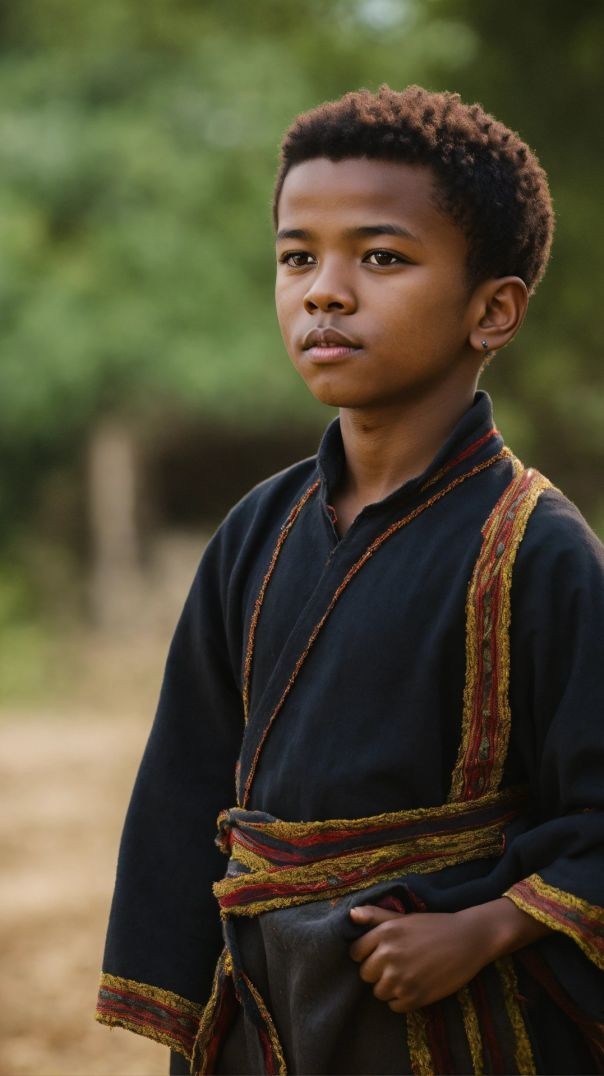
According to what we are seeing here, the ancient Israelites would have resembled the Ancient Edenic people because they were not separated from the main genetic pool. They would have maintained the features of Adam and Eve, that of today's Africans
So it would also make historical sense when Jesus, also being an ancient Israelite, said, “ 23 How dreadful it will be in those days for pregnant women and nursing mothers! There will be great distress in the land and wrath against THIS PEOPLE. Referring to the beginning of the industrialisation of slavery, of which the women and Edenic people were the largest product

Johnthebeloved

0

1

4

Delicious Casserole Recipe for the entire family

Nichole Fisher-Curtis

0

1

110

⁣this video uncovers the shocking truth behind Egypt's whitewashed history. Dive deep into newly revealed evidence that challenges long-held beliefs and sheds light on the untold stories of ancient Egypt.

Berean Scholar

0

3

33