ویدیوهای برتر






Shalom to all. If you would to purchase the song or Album. you can go to either my website www.sonofshemites.com
or You can stream it on Spotify https://open.spotify.com/album..../5EC9v0JPlegqDOSVlyy ITUNE & APPLE MUSIC: http://itunes.apple.com/album/id/1454563295 http://itunes.apple.com/album/id1454563295?ls=1&app=itunes
ITS ON ALL DIGITAL MUSIC DISTRIBUTION PLATFORMS...ALSO DONT FORGET TO SUBSCRIBE TO YOUTUBE CHANNEL SON OF SHEMITES



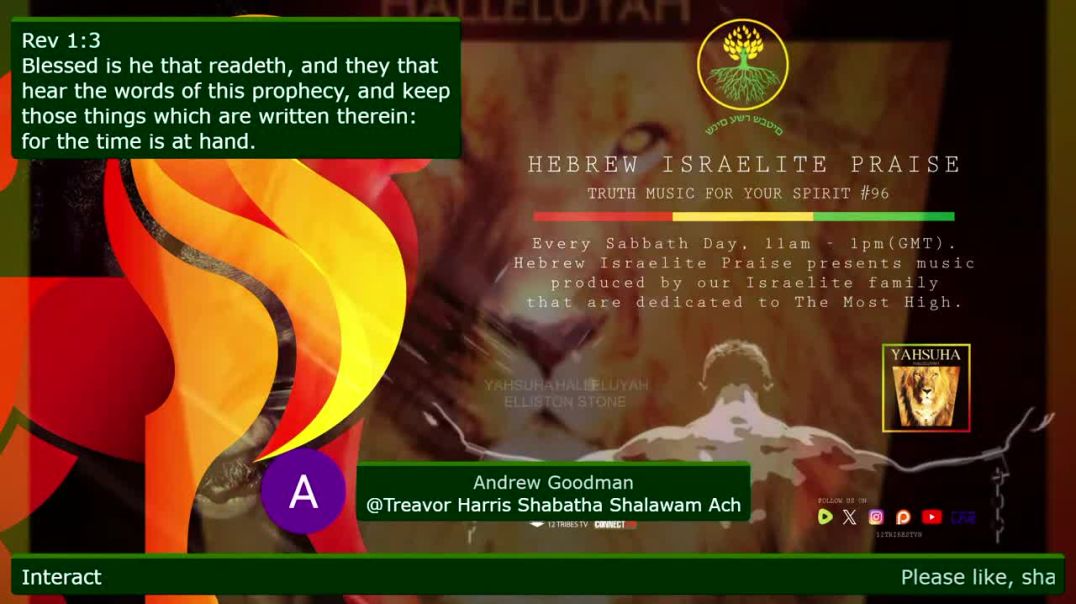

Hebrew Israelite Praise w/ Brotha J - Truth Music For Your Spirit #96
every Sabbath Day, 11am - 1pm (GMT). Brotha J plays truth music produced
by our Israelite artists scattered to the four corners, that are
dedicated to The Most High. Shabbat Shalom.
FIND US ON SOCIAL MEDIA:
HebrewConnectTV: https://hebrewconnect.tv/@12TribesTVN
Facebook (Meta): https://www.facebook.com/12Tribestv
Twitter (X): https://www.twitter.com/12tribestvn
Instagram: https://www.instagram.com/12tribestvn
Mixcloud: https://www.mixcloud.com/12Tribestvn
Patreon: https://www.patreon.com/12TTVN
Rumble: https://rumble.com/c/c-5351485
TRACKLIST:
TBC
Tracklist is also embedded in video.
When song is ON-AIR look just above the LEFT ARM of the MAN PRAYING
to source TRACK TITLE, and just above the RIGHT ARM for TRACK ARTWORK.
INSTRUCTIONS FOR SENDING US YOUR PROMO MUSIC.
1 - Make sure to include a one sheet containing information regarding
the track your are sending.
2 - All promo tracks sent in must be at least MP3 (320) format.
3 - To send us your tracks, email: promotracks@12tribestvn.com
TO BOOK THE DJ
Email: bookings@12tribestvn.com
TO JOIN MAILING LIST
Email: mailinglist@12tribestvn.com
#truthmusic, #setapartmusic, #israelitemusic,




Not all Children of Jacob Israel wanted to be free, they forgot why they went into captivity in the first place, and were scattered into the four winds. Many still repeat the same sins, their foreparents taugt them and others have joined the enemies of Jacob's Children to their own demise, Psalm 83 , 2 Kings 17
Maroons do not practice chattel slavery, and were never compensated for "loss of slaves" by any Slave holding countries for slavery. Domestic servants are a part of the Children of Israel customs to this day, and days workers, or those who dwell with the families, and they are free to come and go based on the terms of their employment.
Obadiah, prophesy, Psalm 83
https://wolperorg.com/

$1 homes, black children being murdered in St Louis all Negroes on deck action now
Jamaica has on average a $4000 Per Capita Income in US it achieves world class results , miracles, signs and wonders, Jehovah is a miracle working GOD
Poverty is not an excuse for crime, some of the poorest countries have the lowest crime rates
Black on black crime is taking its toll on many communities, we must repent of this wickedness
Exodus 20 follow the commandments
Free House Free land cash up to more than $25000 to move to US and European cities
https://www.youtube.com/watch?v=Aeqz0UeJET8
Hebrews can band together to purhase or take over a whole blighted community or city an rebuild from scratch to make it liveable again
Pros and cons of buying $1 Detroit homes, https://moneynation.com/can-buy-1-detroit-home/
West Virginia is paying people to move there.
Do these ...https://slate.com/business/202....1/04/west-virginia-r Virginia is the latest place to offer a relocation incentive to remote workers: $10,000, parceled out in monthly grants, for your first year in Morgantown, with a $2,000 bonus to settle in for...West Virginia will pay remote workers $12K to move to state
https://www.fox29.com/news/wes....t-virginia-will-pay-
West Virginia - Pack your bags: A program in West Virginia announced it will pay remote workers $12,000 to move to the Mountain State. The new initiative, launched by Ascend West Virginia, will pay...
Forsaken Detroit homes for sale for as little as $1 - New ...
https://www.nydailynews.com/li....fe-style/real-estate
Detroit's real estate market is in dismal shape, and some properties, like this 2,248 square-foot home, are on sale for $1.








In Exodus, YAHUAH satisfied the natural hunger of the Yahsharelites by Manna from heaven. Now in the Book of JOHN we see the living Manna Yahusha the Anointed One given to satisfy the soul eternally.
Contact Us: http://www.yahushascall.com




We met up with Arsenal and Nigeria footballer Alex Iwobi when he returned to Lagos to visit a football academy. He met up with some of the young players who look up to him as an inspiration.
Subscribe: http://bit.ly/subscribetoafrica
Website: https://www.bbc.com/africa
Facebook: https://www.facebook.com/bbcnewsafrica/
Twitter: https://www.twitter.com/bbcafrica/
Instagram: https://www.instagram.com/bbcafrica/