Top videos

Artist:AhdaiYah
Album: Eternal
Song: Praise Yah Forever
This CD is awesome I love every song off of it...
Check it out
http://www.royalkingdomproductions.com/
The images may not go with the song, but I'm still learning this utube thing.
Shalom Dear one, Enjoy!!




Fix Your Attitude follows the experience of Hebrew children and their families in different stages of the Hebrew walk. Old habits can and will be changed because the Brewlings have a heart that truly desires to serve Yah. Each episode examines the Torah principles on how we should treat one another, the strangers among us and the other nations. Brewlings find themselves in situations where they really have to fix their attitude in order to honor Yah.
This show is interactive. You can email us at thebrewlingsnetwork@gmail.com to share your Torah inspired response to help Celeste and her family find solutions. Shalom! #comedy-drama #hebrew
How to avoid worship idols and peoples' ancestors unawares, each of their Pantheons, and how they incorporate them in their greetings, teachings, songs poems, theories, books, subtly and boldy. Satan presents himself as an angel of light. False teachers will arise and deceive many, Christ warned us
https://archive.org/details/hi....storyanciente05rawlg
https://en.m.wikipedia.org/wiki/Odinala
https://voxtrendy.com/nathanie....l-bassey-hallelujah-
https://www.tiktok.com/@famouz....gospel/video/7203070
https://www.hebrewigbo.com/religious.html
BOOK:
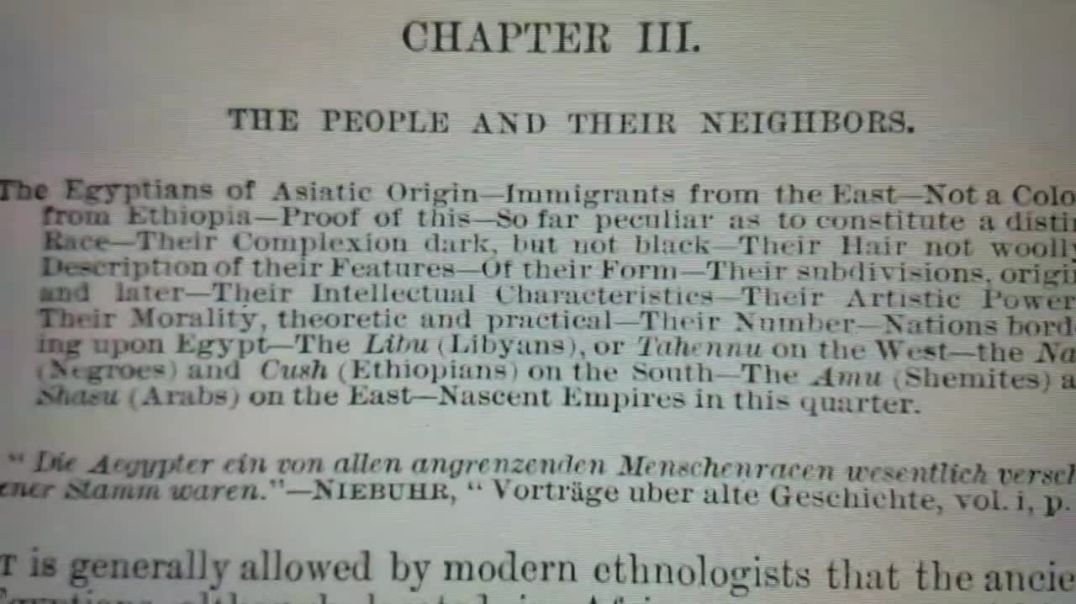
History of Ancient Egypt
George Rawlinson
https://hebrewconnect.tv/watch..../history-of-ancient-
https://hebrewconnect.tv/watch..../planets-solar-syste
https://en.m.wikipedia.org/wiki/Kongo_religion
Kongo religion (Kikongo: Bukongo or Bakongo) encompasses the traditional beliefs of the Bakongo people. Due to the highly centralized position of the Kingdom of Kongo, its leaders were able to influence much of the traditional religious practices across the Congo Basin.[1] As a result, many other ethnic groups and kingdoms in West-Central Africa, like the Chokwe and Mbundu, adopted elements of Bakongo spirituality.[2][3]
The spirituality is based on a complex animistic system and a pantheon of spirits. The principle Creator God of the world is Nzambi Mpungu, the sovereign master, and his female counterpart, Nzambici.[2] While Nzambi Mpungu, who gave birth to the universe and the spirits who inhabit it, is vital to the spirituality, ancestor veneration is the core principle.[4]
The Bakongo cosmos is split between two worlds: the top half representing the physical world, or ku nseke and the bottom half representing the spiritual world, or ku mpèmba.[2] Expert healers, known as Banganga, undergo extensive training to commune with the ancestors in the spiritual realms and seek guidance from them.[1]
BIG BANG THEORY SIMILAR TO CONGO PANTHEON
Congo cosmology pantheon of idols and similarity to the Big bang theory pushed by antiChrists
Creation of the universeedit
The Bakongo believe that in the beginning, there was only a circular void, called mbûngi, with no life. The Great Spirit, Nzambi Mpungu, summoned a spark of fire, or Kalûnga, that grew until it filled the mbûngi.[2] When it grew too large, Kalûnga became a great force of energy and unleashed heated elements across space, forming the universe with the Sun, stars, planets, etc.[2] Because of this, kalûnga is seen as the origin of life and a force of motion. The Bakongo believe that life requires constant change and perpetual motion. Nzambi Mpungu is also referred to as Kalûnga, the God of change.[2] Similarities between the Bakongo belief of Kalûnga and the Big Bang Theory have been studied.[13]
https://en.m.wikipedia.org/wiki/Kongo_religion
AMERICAS
In the Kingdom of Ndongo in Angola, nature spirits were called kilundu. They existed in the same context as nkisi and nkita. However, like bisimbi, kilundu were largely believed to be spirits that were once living people, who transformed into spirits after they entered the spiritual world. This created evidence of a unifying concept of the two worlds and the four moments of life across ethnic groups in both Kongo and Angola. It also verified that even nature spirits were to go through the lifecycle.[1] 17th Century oral tradition recounts the story of two kilundu named Navieza and Cassumba who left their homeland in the Upper Ganguela region to flee disease. While on their journey, they took shelter in "an isolated hut" in the Kisama. There they died, entered the spiritual world and were transformed into nature spirits whose purpose became to protect those who venerated them from diseases.[1]
This person to nature spirit transformation concept was also recorded in the Kingdom of Kongo in the 20th Century. A man named Mbola is said to have died and transformed into a simbi water spirit that inhabited a stream and taught the living how to use his spiritual power for healing and to create sacred medicines, which became known as mbola.[1]
Unlike the others, nkondi were specifically used as a means to inflict pain on those who came against the kingdom.[20]
The Great Mfinda (forest)
As previously mentioned, nature is essential to Kongo spirituality. While nature spirits later became more associated with water, or kalûnga, they were also known to dwell in the forest, or mfinda (finda in Hoodoo). The Kingdom of Kongo used the term chibila, which referred to sacred groves, where they would venerate these forest spirits.[21] The Kongo people also believed that some ancestors inhabited the forest after death and maintained their spiritual presence in their descendants' lives. These particular ancestors were believed to have died, traveled to Mpémba, and then were reborn as bisimbi. Thus, The Great Mfinda existed as a meeting point between the physical world and the spiritual world. The living saw it as a source of physical nourishment through hunting and spiritual nourishment through contact with the ancestors. One expert on Kongo religion, Dr. Fu-Kiau, even described some precolonial Kongo cosmograms with mfinda as a bridge between the two worlds.[
Charms
In the 17th century, the Bakongo people expanded the concept of nkisi to include consecrated objects or charms that contained the essence of nature spirits and their spiritual powers. These minkisi (sing. nkisi) were used for protection and healing.[1] Minkisi were also used to make mojo, or conjure, bags. These mojo bags were essentially small bags where magical items were normally stored. They were also believed to contained the spiritual power of nkisi.[22] A nganga created mojo bags for individuals, using ingredients connected to a specific simbi to invoke the spirit into the mojo bag. Bakongo spiritual philosophy influenced the creation of mojo bags, with Black Americans including certain natural ingredients or animal bones, to house the simbi spirit or an ancestral spirit inside a bag for either protection or healing.[23]
THE AMERICAS
Main articles: Traditional African religions and Bantu religion
Due to the Atlantic slave trade, Bakongo religion was translocated to the Americas along with its enslaved practitioners. Some surviving traditions include conjure, dreaming, possession by the dead to learn wisdom from the ancestors, traditional healing and working with minkisi. The spiritual traditions and religions that have preserved Kongo traditions include Winti, Hoodoo, Palo Monte, Lumbalú, Kumina, Haitian Vodou, Candomblé Bantu, and Venezuelan Yuyu.[24][25][22]
Shriners:
https://en.m.wikipedia.org/wiki/Shriners
Necromancers , pouring libation for the dead
https://hebrewconnect.tv/watch..../nipsey-hustle-mothe



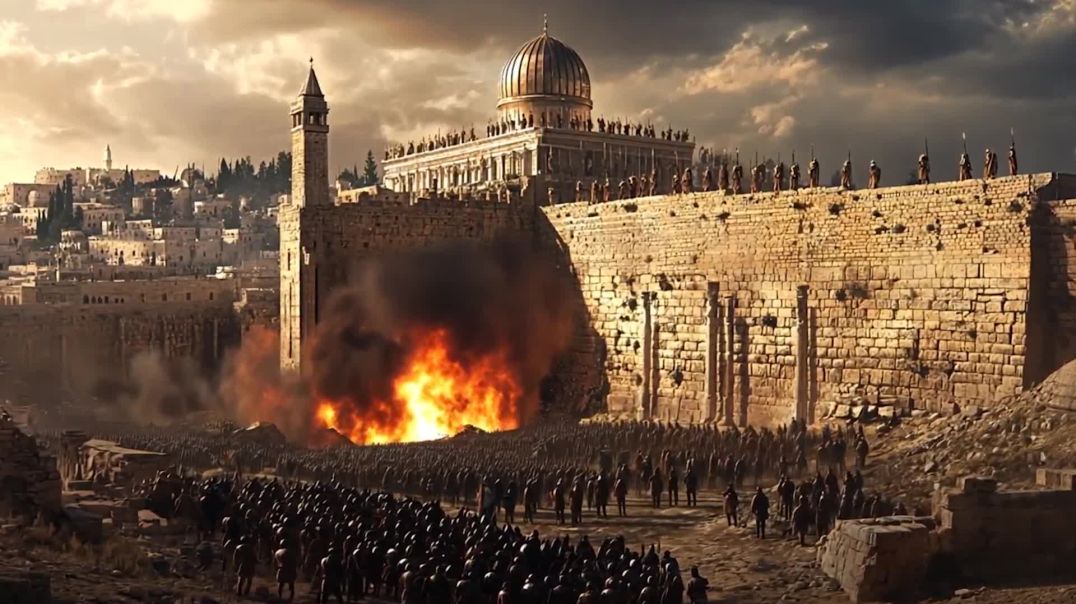
The epic story of 70AD. Join us as we read little known first hand accounts of 70AD, the fall of Jerusalem.
FAIR USE:
COPYRIGHT DISCLAIMER UNDER SECTION 107 OF THE COPYRIGHT ACT 1976, ALLOWANCE IS MADE FOR "FAIR USE" FOR PURPOSES SUCH AS CRITICISM, COMMENT, NEWS REPORTING, TEACHING, SCHOLARSHIP, AND RESEARCH. FAIR USE IS A USE PERMITTED BY COPYRIGHT STATUTE THAT MIGHT OTHERWISE BE INFRINGING. NON-PROFIT, EDUCATIONAL OR PERSONAL USE TIPS THE BALANCE IN FAVOR OF FAIR USE
DISCLAIMER:
This video does not contain Hate Speech nor promote or condone violence of any kind. It may contain thought provoking topics related to the Bible, race, identity, Civil Rights, racial bias, and racism. It is intended for those seeking open and honest discussions about these subjects. If you are easily offended, triggered, or disturbed by challenging perspectives, sensitive about religious discussion, or wish to preserve your current bias, this presentation may not be suitable for you.
However, if you are open to examining religious narratives, identity, Civil Rights, racial bias, and racism with a critical eye, not easily offended, and are ready to embark on a journey of intellectual growth and spiritual maturity, then this presentation or discussion is for you. Join us as we discuss the injustices and bias against the African Israelite population.
Follow Us on Instgram @ / channel
Support By Becoming a $1 Patreon Supporter or Donate via Paypal. Thank you in advance for your support!
Support By Patreon - https://www.patreon.com/benayah4israel
Support By Donation - https://benayah4israel.org/donations
Support By CASHAPP - $benayah4israel

Background music courtesy www.bensound.com
Copyright Disclaimer under Section 107 of the copyright act 1976, allowance is made for fair use for purposes such as criticism, comment, news reporting, scholarship, and research. Fair use is a use permitted by copyright statute that might otherwise be infringing. Non-profit, educational or personal use tips the balance in favour of fair use.

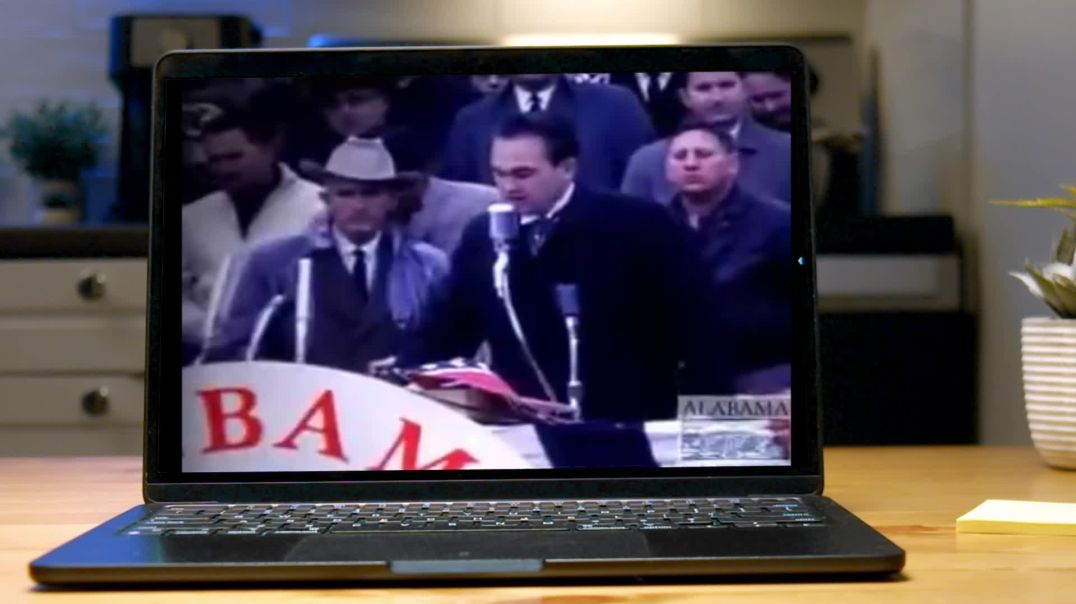

Learn new memory verses with Zaqen Azariah to hide Yah's word in your heart.#family #faith #learning #sabbath #hebrew #bible #shorts #shortvideo #youtube #watch #biblestories #children #grandpa #grandad #oldschool #wisdom #bibleforchildren #sabbath #shabbat #shortvideo #bibleforchildren #sabbathschoolservice #faith #children #howtomemorizebibleforkids #hebrewroots #howtoremember #memorizationtechniques #biblestudy #bibleforchildren #sabbath #music #shabbat #sabbathschoolservice #biblestories #learning #repentance #friendship #friendshipgoals #relationships #yah #yahweh #yahusha #yahuah #yahawashi #yahawah #bibleforchildren #characterdevelopment #characterbuilding #yeshua #intergrity #thebrewlingsnetwork #brewlings #yahwah #yhwh #yhvh #torah #torah4you #torahforlife #torahthoughts #homeschooling #homeschoolkids #homeschoolmom #afterschool #fun

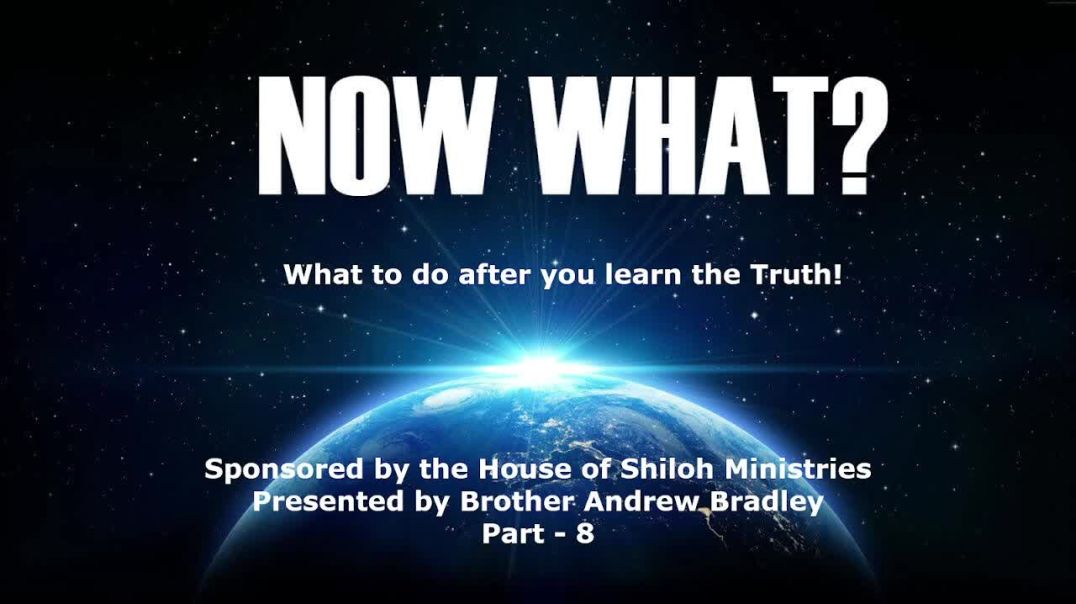
YAHUAH has awakened you and now you realize that you are a Hebrew Israelite. Now What? Does it matter? Why does it matter? How does it matter? How will this impact your family? What societal pressures can you expect?
This lesson is designed to address those questions and much more! We welcome you to join us on this new and exciting journey.
Please use links below to connect to the additional parts of this lesson:
PART 9
https://youtu.be/O43W3M5J-zQ
PART 10
https://youtu.be/pUxCMqahl9E
PART 11
https://youtu.be/ZxPGBnLGNjQ
PART 12
https://youtu.be/S3l1yoLDgLs
PART 13
https://youtu.be/f8D0sBu1U-o
To view more lessons, visit us at:
www.houseofshiloh.org


On June 3, 2019, there was a massacre on the streets of Sudan’s capital, Khartoum. This is the story of that massacre, told through the phone cameras of those who kept filming, even as they came under live fire.
BBC Africa Eye has now analysed more than 300 videos shot in Khartoum on June 3rd. Using these videos, we can bring you a shocking, street-level view of the violence that was inflicted on protesters that morning - and the first direct testimony from men who say they took part in this attack.
Watch this film in Arabic /
يمكن مشاهدة هذا الفيلم الوثائقي باللغة العربية هنا:
https://youtu.be/7Ts72P_GUUk
Subscribe: http://bit.ly/subscribetoafrica
Website: https://www.bbc.com/africa
Facebook: https://www.facebook.com/bbcnewsafrica/
Twitter: https://www.twitter.com/bbcafrica/
Instagram: https://www.instagram.com/bbcafrica/